
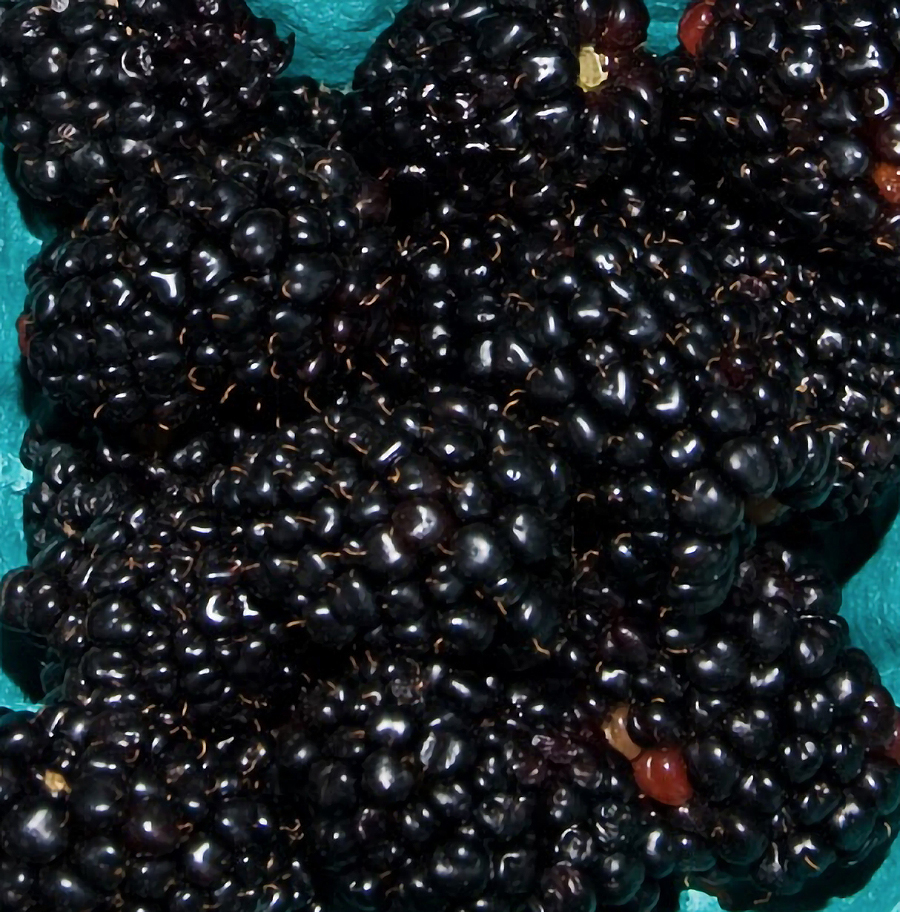
Blackberry, Kiowa
We Guarantee Healthy Delivery - See Our Warranty Information
OUR WARRANTY
We take great pride in the quality of our nursery stock and the care it receives at our nursery. We guarantee our plants to be true to name as labelled, to be alive and well when you receive them and, when given proper care and attention, to leaf out and grow.
- If, upon receipt, you are not satisfied with the quality and condition of your plants, you may return them for a full refund.
- Claims for damaged or unsatisfactory stock or shortages must be made within five days of receipt of order.
- If, after following the enclosed planting instructions, your plants do not leaf out and grow, we will replace them one time, the following season, provided you pay the cost of shipping and handling.
All claims must be made by June 1, 2027. In all cases, our liability is limited to the purchase price of the stock.
We do not recommend or encourage ordering varieties that are clearly incompatible with your climate and will notify you if anything you order will not be covered by the warranty due to incompatibility. In addition, we cannot be held responsible for losses that result from any extreme climatic event such as those that are occurring with increasing frequency.
USDA Plant Hardiness Zone Map

Rootstock Descriptions
Betulaefolia (Betula)
Standard rootstock for Asian and flowering pears. More vigorous than Calleryana; unpruned tree height of fruiting varieties 15-25 feet, but tree may be held to any height with summer pruning. Tolerates wet soil, dry soil, alkaline soil. Resistant to pear decline. More cold hardy than Calleryana, to at least -10° F.
Citation (Cit.)
Peaches and nectarines dwarfed to eight to fourteen feet, apricots and plums dwarfed to twelve to eighteen feet. Very tolerant of wet soil, but not drought tolerant (induces early dormancy in dry soil) so needs very regular water in hot climates. A top dressing of mulch can help maintain soil moisture. Resists root-knot nematodes. Induces heavy bearing at a young age. Very winter hardy. Strong and well anchored. Pat. No. 5112 (Zaiger)
Geneva 969 (Gen.)
Dwarfing apple rootstock developed by Cornell University. Well anchored trees grow 50% of standard height. High resistance to woolly apple aphid and fire blight. Medium resistance to crown and root rot. Few suckers and burr knots. Precocious and productive. Provide adequate drainage.
Lovell (Lov.)
Vigorous, standard rootstock for plums, peaches, nectarines, apricots, prunes, almonds. More tolerant of wet soils than Nemaguard, also more cold hardy. Susceptible to nematodes in sandy soils. Provides good anchorage and high degree of disease resistance. Unpruned tree height of standard varieties 15-25 feet. Size can be controlled further with summer pruning.
M 111
Excellent all-around rootstock for apples. Induces bearing at a younger age than standards. Tolerates wet soil, dry soil, poor soil, soil with high temperatures. Resists woolly apple aphids, collar rot and fireblight. Apparently resistant to oak root fungus. Trees dwarfed to 80-90% of standard, or about 15-25 feet, but can be further controlled with summer pruning. Very cold hardy, does not promote early bud break, Used in Ontario, Canada. Rarely suckers.
M7 (EMLA-7)
Dwarfing rootstock for apples. Unpruned tree height is two thirds the size of standard or about twelve to twenty feet. Induces early and heavy bearing. Resistant to fireblight and powdery mildew, moderately resistant to collar rot. Has good anchorage. Very winter hardy, widely adapted.
Mahaleb (Mah.)
The most winter hardy of the commonly used cherry rootstocks. Resists crown gall, bacterial canker, some nematodes. Not tolerant of wet soils. Standard varieties slightly dwarfed to about 85% of their height on Mazzard, or about 25-35 feet. Can be held at any height with summer pruning. Induces early, heavy bearing.
Marianna 26-24 (Mari.)
Standard rootstock for apricots, plums, prunes, most almonds. Mature trees comparatively small, 15-20 feet if unpruned, but can be kept smaller with summer pruning. Shallow root system, much more tolerant of wet soils than Lovell or Nemaguard; is not tolerant of hot soils. Has tendency to sucker. Resistant to oak root fungus, root knot nematodes, root rot.
Maxma 14 (Max.)
Cherries are dwarfed to 2/3 of standard, about fifteen feet. Very precocious and productive. Extensive root system with good anchorage. Tolerant of wet soils. Resistant to nematodes, bacterial canker and iron choloris. Very little suckering.
Mazzard (Mazz.)
Standard rootstock for sweet cherries; unpruned tree height of standard varieties is 30-40 feet. Trees may be held to any height with summer pruning. Vigorous, more tolerant of wet soils than Mahaleb, but good drainage still required. Resistant to root knot nematodes and oak root fungus. Well anchored. Relatively cold hardy.
Myrobalan 29C (Myro.)
Excellent, all-around rootstock for apricots, plums, almonds. Shallow but vigorous root system tolerates wet soils and is widely adapted; is more deeply rooted than Marianna. Resistant to root knot nematodes and has some resistance to oak root fungus. Unpruned tree height of standard varieties 15-25 feet, but can control size further with summer pruning. Winter hardy in Michigan.
Nemaguard (Nema.)
Standard rootstock for nectarines, peaches, apricots, plums, prunes, almonds. Vigorous, resists root knot nematode. Excellent for well drained soils. In heavy or poorly drained soil, plant on mound or hill. May not be winter hardy below 5°F. Unpruned tree height of standard varieties 15-25 feet. Size can be controlled further with summer pruning.
Old Home x Farmingdale 87 (OHxF87)
Pear rootstock producing trees at 60-70% of standard size. Resistant to fire blight and induces early bearing.
Old Home X Farmingdale 333 (OHxF 333)
For European and Asian pears. Trees dwarfed to two thirds the size of standard, or about twelve to eighteen feet. Easily kept smaller with summer pruning. Productive and precocious. Highly resistant to fireblight and pear decline and moderately tolerant of crown gall. Well anchored and does not sucker. Highly resistant to winter injury. Widely adapted.
Paradox
Vigorous hybrid rootstock for walnuts. English varieties on Paradox fast growing and productive at a young age. More tolerant of wet soil than Northern California Black, but less resistant to oak root fungus.
Viking
Standard rootstock for almonds and peaches. Highly adaptable and deep rooted, tolerant of wet and clay soils. Vigorous, precocious, productive. Resistant to nematodes. Suckers very little, if at all. (Zaiger)
Ordering & Shipping Information
How To Order
Please note that our shipping season extends from the beginning of January to the first week of March. Your order cannot be shipped prior to that because our growers have to wait until the plants are dormant before they can ship to us. Hence, we do not receive our stock until the end of December. We cannot ship after the first week of March because we do not have cold storage and, under normal circumstances, most trees start breaking dormancy shortly thereafter.
Most of our trees are 5/8" caliper and will be about three to three and a half feet when you receive them. They will be bare root which means that they are dormant with no leaves, no soil around the roots and no pot. The roots will be packed in moist moss to keep them in good condition during shipping. Blueberries, figs and olives, as well as some berries and pomegranates, are shipped in pots. Planting of potted items can be delayed if necessary, but bareroot trees need to be planted as soon as possible after receipt. Please remember that they are very resistant to cold when dormant, so do not hesitate to plant unless the weather is particularly foul.
- We do not charge your credit card until right before we ship your order.
- We ship only within the United States. NO EXCEPTIONS!
Shipping & Handling
Orders within the continental United States are shipped by UPS, so please make sure that we have your street address. Orders to Puerto Rico and Alaska are shipped by Priority Mail so we will need your correct mailing address.
- Please note our minimum shipping charges listed in the right column.
- IMPORTANT: Orders will not be filled or held until full payment has been received. Orders for which payment has been made by check will not be shipped until the check has cleared. We reserve the right to cancel orders or add a 15% restocking fee per item on orders to which excessive changes have been made.
- When your order is shipped, you will receive an email through UPS with the tracking number. Please make sure that you give us your correct email! For orders to Puerto Rico and Alaska, we will email you to let you know that your order has shipped so that you know to be looking for it.
Shipping For Orchard Supplies And Tools
Add 15% of purchase price unless otherwise specified.
Roses
Roses are shipped in January only. If your order contains roses in addition to trees or other items and you choose February or March shipping, the roses will be treated as a separate order and will be shipped in January. To save on shipping costs, you may want to have your entire order shipped in January. If climatic conditions in your area prevent planting by our shipping deadline, you may keep plants dormant by storing them at 35°F. Keep roots moist during storage. Additional storage information is available upon request.
Agricultural Regulations
Agricultural regulations prevent us from shipping some varieties of plants to certain states. If this should apply to any plants in your order, we will notify you by email, phone or mail.
Wyoming and Hawaii
Sorry, but we cannot send shipments to Wyoming or Hawaii at this time.
Shipping Charges
|
California Shipping | |
|---|---|
| $27.00 | MINIMUM SHIPPING CHARGE OR AS FOLLOWS IF TOTAL SHIPPING EXCEEDS MINIMUM |
| $8.50 | PER TREE |
| $4.00 | PER ROSE, POTTED BERRY, GRAPE OR BLUEBERRY |
|
$2.00 |
PER BARE ROOT GRAPE |
| EXAMPLES SHIPPING CHARGE FOR 1 APPLE TREE= $27.00 SHIPPING CHARGE FOR 4 APPLE TREES= $34.00 (4 @ $8.50) |
|
|
Shipping Charges For States West Of The Mississippi | |
|---|---|
| $37.00 | MINIMUM SHIPPING CHARGE OR AS FOLLOWS IF TOTAL SHIPPING EXCEEDS MINIMUM. |
| $8.50 | PER TREE |
| $4.00 | PER ROSE, POTTED BERRY, GRAPE OR BLUEBERRY |
|
$2.00 |
PER BARE ROOT GRAPE |
| EXAMPLES SHIPPING CHARGE FOR 1 APPLE TREE= $37.00 SHIPPING CHARGE FOR 5 APPLE TREES= $42.50 (5 @ $8.50) |
|
|
Shipping Charges For States East Of The Mississippi | |
|---|---|
| $42.00 | MINIMUM SHIPPING CHARGE OR AS FOLLOWS IF TOTAL SHIPPING EXCEEDS MINIMUM |
| $8.50 | PER TREE |
| $4.00 | PER ROSE, POTTED BERRY, GRAPE OR BLUEBERRY |
|
$2.00 |
PER BARE ROOT GRAPE |
| EXAMPLES SHIPPING CHARGE FOR 1 APPLE TREE= $42.00 SHIPPING CHARGE FOR 6 APPLE TREES= $51.00 (6 @ $8.50) |
|
Shipping Charges For Puerto Rico and Alaska
TO BE DETERMINED BASED ON ESTIMATED WEIGHT AND BOX SIZE.
Choosing Your Shipping Time
 We ship our trees in January, February and the first week of March. So how do you determine the best time for your trees to be shipped to you? First, as long as you can dig your soil, you can plant fruit trees even if the weather is cold. Dormant trees are very cold tolerant and, as long as they have not broken dormancy, the cold will not hurt them. It is always better to get the trees in as early as possible, so if you live in a mild winter area like Los Angeles or Phoenix or Miami, you do not want to wait until March to plant.
 If your soil freezes in the winter, you will want to plant as soon as the soil can be dug. If that happens after we have stopped shipping, you have some options. The trees can be kept dormant by storing them in a cool, dark spot that stays above freezing (35 to 45 degrees). The roots can remain wrapped in the moss in which they are shipped. Just make sure that the moss and roots stay moist. You can also plant the trees in biodegradable pots until the ground can be worked. Once planted, place them in a bright area and treat like any other container plant until you can get them in the ground.
The basic idea is to get the trees planted as soon as possible so that they can start adapting to their new environs. If you request an inappropriate shipping time, we will try to ask you about it when you place your order. We want you to be successful and happy with your trees!
Berries
How To Choose A Blackberry
 Consider your climate, your soil, the location of the plants and your tolerance for thorns! Some of the tastiest and most prolific berries have thorns. Decide which varieties best suit your needs.
Blackberries flourish in full sun in most climates and they prefer rich, moist soil and generous fertilization. Drip irrigation is recommended as the leaves will stay dry and the plants are less likely to get rust, a fungal disease. The trailing canes need major support, typically a fence, and the more upright varieties such as Apache and Navajo also do better with some support. Allow the plants to grow naturally the first year and then train them on the supports the second year. The trailing varieties can be tied or woven along the supports. After producing berries, the fruiting canes should be cut to the ground.
More About Blackberries
An easy method for yearly pruning is mentioned in Robert Kourik’s book “Your edible landscape, naturally”. Plant twice as many rows of blackberries as you need; each year cut every other row to the ground. The berries are usually planted 3 feet apart, in rows 5 to 6 feet apart.
Blackberries freeze very well. They are better suited for jelly than jam, due to the abundance of seeds. Blackberry cobbler is a favorite summertime dessert.
Blackberry Cobbler
- Toss 4 ½ cups of berries with 1/3 cup of sugar and 1 ½ tablespoons of flour. Let stand while you are making the dough.
- Combine 1 ½ cups of flour, 3/8 teaspoon salt, 1 ½ tablespoons of sugar and 2 ¼ teaspoons of baking powder.
- Cut 6 tablespoons of butter into the mixture using a pastry cutter or two knives, until the mixture resembles coarse cornmeal.
- Add ¾ cup whipping cream or half and half and mix lightly.
- Put the berries into a 1 ½ quart baking dish. Press the dough into patties, about 2 ½” wide and ½” thick.
- Place them atop the berries and bake at 375 degrees 35 to 40 minutes.
- You can serve cobbler with whipped cream or ice cream.
Gooseberries
First written mention of gooseberries was in England in 1276. They became very popular in that country and there were hundreds of varieties by the nineteenth century. It became great sport to see who could produce the variety with the largest berries. American varieties have been bred, usually exhibiting smaller berries, but being more resistant to mildew, a disease common with the European varieties.
Raspberries
Raspberries are heralded by many as the tastiest of all berries. They are very delicate and cannot be kept for longer than a few days – a week at most in the refrigerator. They do, however, freeze well. Raspberries are red, black or yellow. Fall Gold, our yellow variety, has a most subtle yet delicious flavor.
Cultivation of raspberries is most successful in areas with cool summers. In hottest areas, some shade is advisable. Generally, the raspberry canes grow to their full size the first year and bear fruit the second. After fruiting, the canes die and new ones replace them. The plants require good drainage, even moisture and fertilization when they are in bloom. Mulching will help keep the soil moist. Plant about 3 feet apart in rows 6 to 10 feet apart. The plants can be treated as freestanding shrubs, but are more satisfactory trained on a fence or a set of wires. Red and yellow varieties require different pruning techniques than the black ones. Consult a pruning book for specific instructions.