Berries
Berries
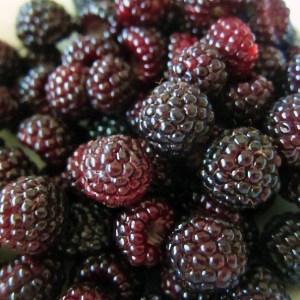
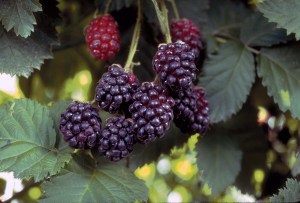
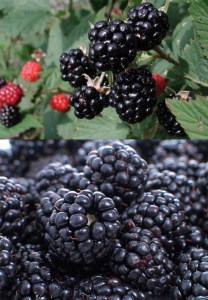
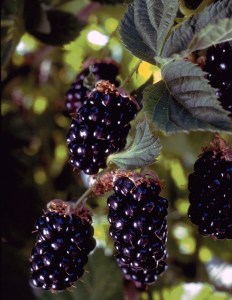
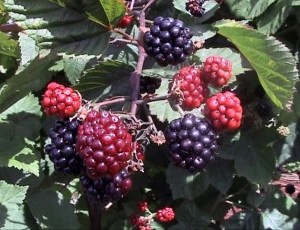
How To Choose A Blackberry
 Consider your climate, your soil, the location of the plants and your tolerance for thorns! Some of the tastiest and most prolific berries have thorns. Decide which varieties best suit your needs.
Blackberries flourish in full sun in most climates and they prefer rich, moist soil and generous fertilization. Drip irrigation is recommended as the leaves will stay dry and the plants are less likely to get rust, a fungal disease. The trailing canes need major support, typically a fence, and the more upright varieties such as Apache and Navajo also do better with some support. Allow the plants to grow naturally the first year and then train them on the supports the second year. The trailing varieties can be tied or woven along the supports. After producing berries, the fruiting canes should be cut to the ground.
More About Blackberries
An easy method for yearly pruning is mentioned in Robert Kourik’s book “Your edible landscape, naturally”. Plant twice as many rows of blackberries as you need; each year cut every other row to the ground. The berries are usually planted 3 feet apart, in rows 5 to 6 feet apart.
Blackberries freeze very well. They are better suited for jelly than jam, due to the abundance of seeds.
Gooseberries
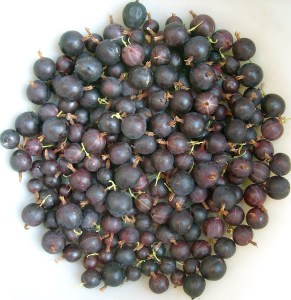
First written mention of gooseberries was in England in 1276. They became very popular in that country and there were hundreds of varieties by the nineteenth century. It became great sport to see who could produce the variety with the largest berries. American varieties have been bred, usually exhibiting smaller berries, but being more resistant to mildew, a disease common with the European varieties.
Raspberries
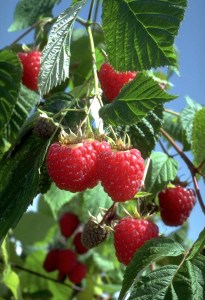
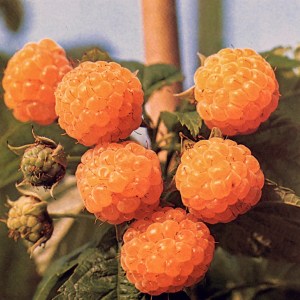
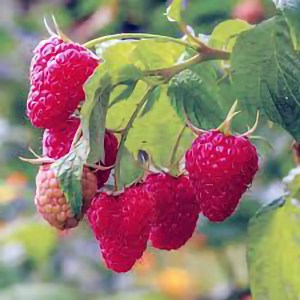
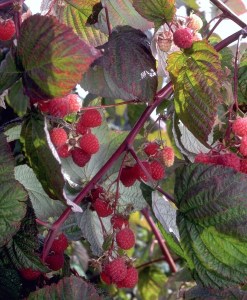
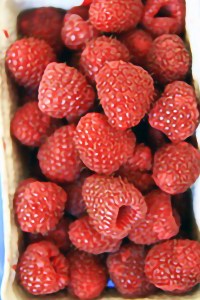
Raspberries are heralded by many as the tastiest of all berries. They are very delicate and cannot be kept for longer than a few days – a week at most in the refrigerator. They do, however, freeze well. Raspberries are red, black or yellow. Fall Gold, our yellow variety, has a most subtle yet delicious flavor.
Cultivation of raspberries is most successful in areas with cool summers. In hottest areas, some shade is advisable. Generally, the raspberry canes grow to their full size the first year and bear fruit the second. After fruiting, the canes die and new ones replace them. The plants require good drainage, even moisture and fertilization when they are in bloom. Mulching will help keep the soil moist. Plant about 3 feet apart in rows 6 to 10 feet apart. The plants can be treated as freestanding shrubs, but are more satisfactory trained on a fence or a set of wires. Red and yellow varieties require different pruning techniques than the black ones. Consult a pruning book for specific instructions.